Abstract
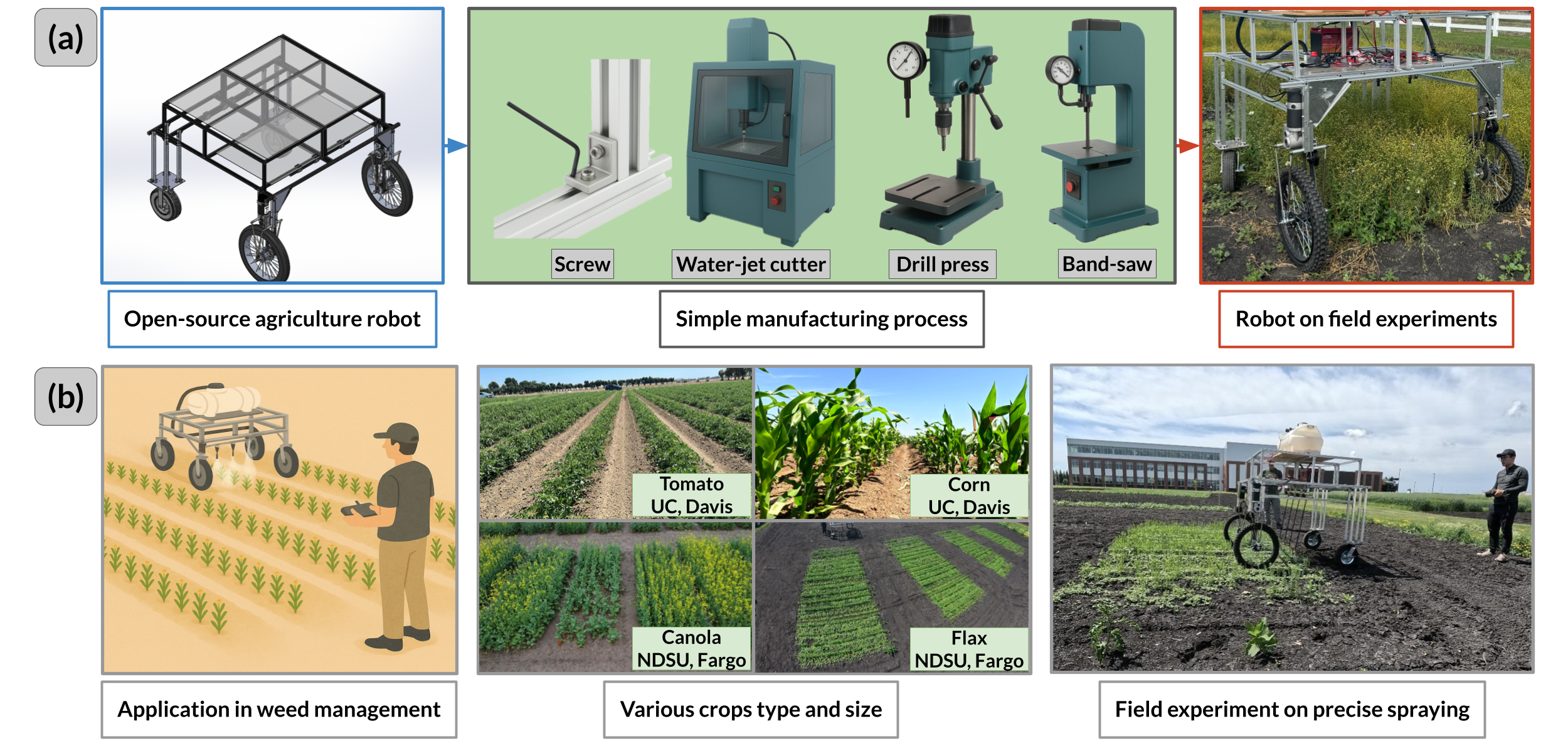
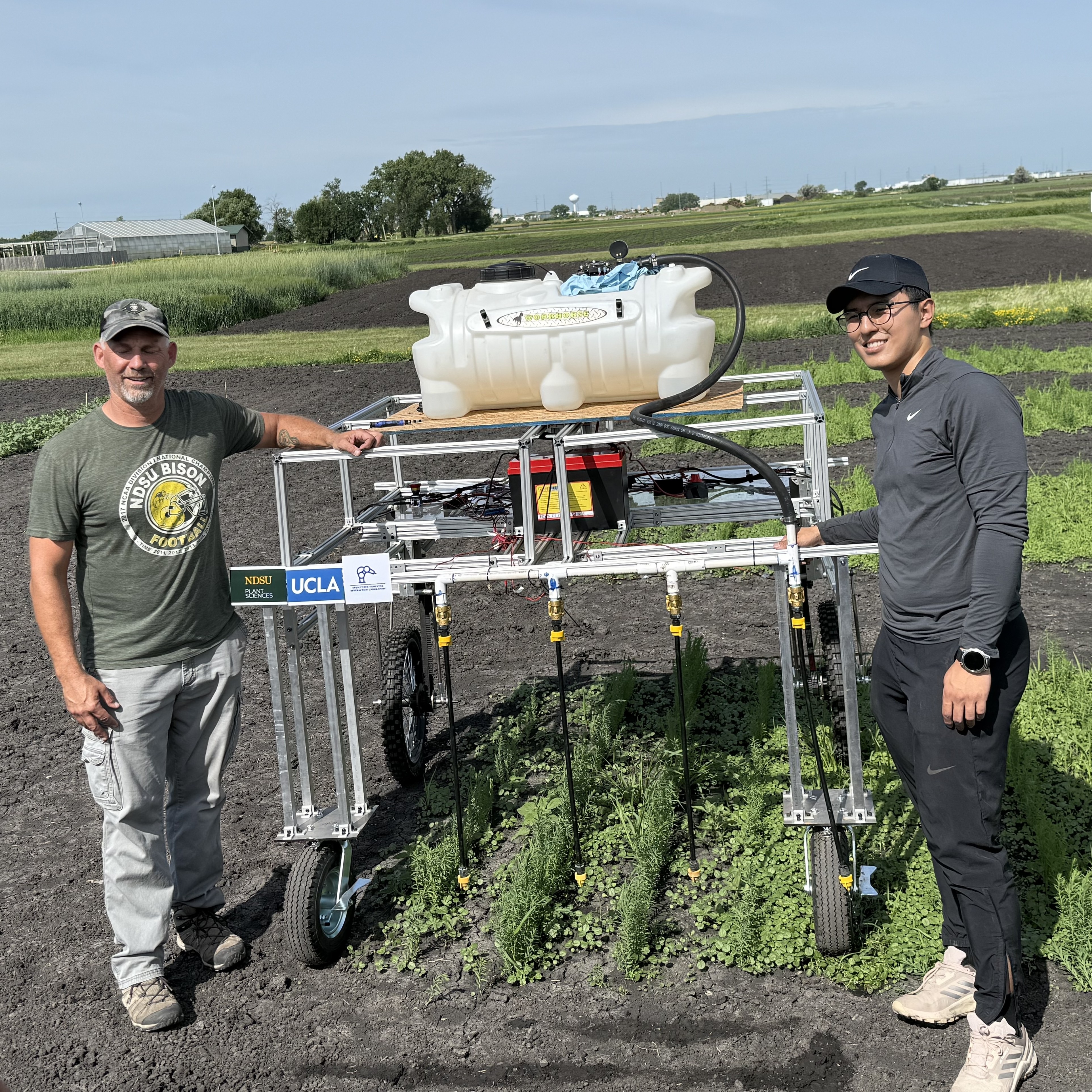
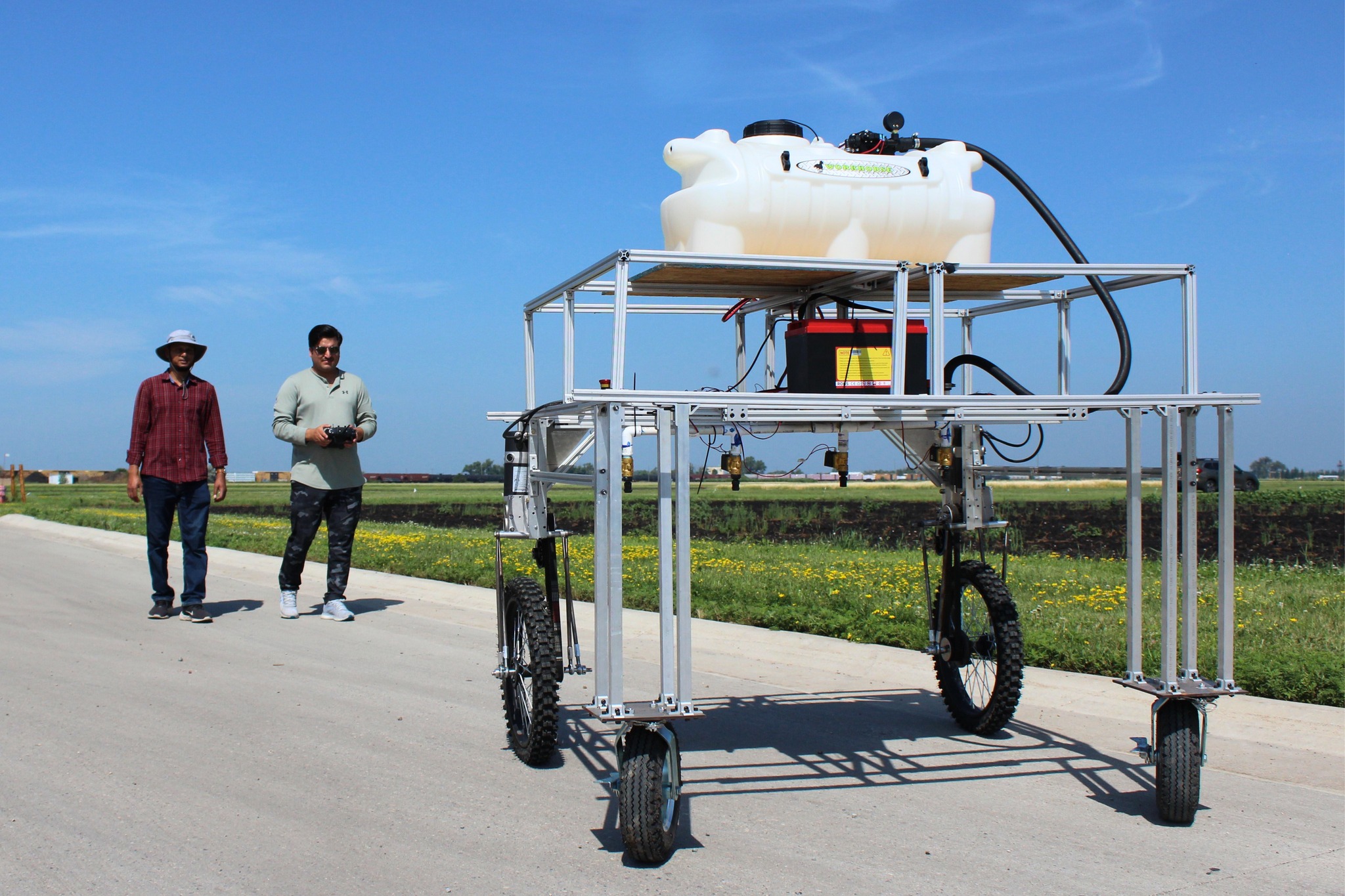
We present the AgriCruiser, an open-source over-the-row agricultural robot developed for low-cost deployment and rapid adaptation across diverse crops and row layouts. The chassis provides an adjustable track width of 1.42 m to 1.57 m, along with a ground clearance of 0.94 m. The AgriCruiser achieves compact pivot turns with radii of 0.71 m to 0.79 m, enabling efficient headland maneuvers. The platform is designed for the integration of the other subsystems, and in this study, a precision spraying system was implemented to assess its effectiveness in weed management. In twelve flax plots, a single robotic spray pass reduced total weed populations (pigweed and Venice mallow) by 24- to 42-fold compared to manual weeding in four flax plots, while also causing less crop damage. Mobility experiments conducted on concrete, asphalt, gravel, grass, and both wet and dry soil confirmed reliable traversal consistent with torque sizing. The complete chassis can be constructed from commodity T-slot extrusion with minimal machining, resulting in a bill of materials costing approximately $5,000-$6,000, which enables replication and customization. The mentioned results demonstrate that low-cost, reconfigurable over-the-row robots can achieve effective weed management with reduced crop damage and labor requirements, while providing a versatile foundation for phenotyping, sensing, and other agriculture applications. Design files and implementation details are released to accelerate research and adoption of modular agricultural robotics.
Introduction
The main contributions of this project are summarized as follows:
- A modular over-the-row chassis design with adjustable track width and high clearance, capable of adapting to different crop types and field layouts.
- The development of a large, agile platform with sufficient payload capacity to accommodate additional subsystems for various agricultural applications and compact maneuvering.
- Precision sprayer integration, capable of herbicide application and data collection to support efficient weed management.
- Field validation demonstrating large reductions in weed density with lower crop damage, as well as cross-terrain and multi-crop traversal.
Acknowledgments
We gratefully acknowledge support from USDA grants 2024-67021-42528, 2022-67022-37021, and 2021-67022-34200.